
Update, September 2026: the methods below still work, but the prices in the text are from 2021, and Supersaver tickets and Saver Day Passes are now sold up to six months ahead, not 60 days. Visitor prices for 2026, second class: the Swiss Travel Pass Flex costs CHF 459 for 8 days within a month (289 for 3 days), the Swiss Travel Pass CHF 439 for 8 days in a row, the Swiss Half Fare Card CHF 150 for a month (it was 120 until 2025), and a Saver Day Pass from CHF 29 with that card or 52 without. The week in the example below therefore costs 459 with the Flex pass, or about 382 with the Half Fare Card and eight Saver Day Passes if you get them at the lowest price. Children aged 6 to 15 still travel free with a parent who holds one of these passes and the free Swiss Family Card. If you live in Switzerland, the Halbtax, GA and GA Night pages have the resident prices; the GA and the Halbtax go up on 13 December 2026. The Half Fare or GA calculator works out which one pays off for how you travel, with the prices before and after that date. Always check the day’s price on sbb.ch before you book.
How to save money when travelling in Switzerland you ask? Well, you might have heard that Switzerland is a really expensive place, however, there are methods to save a few bucks. Today, I will show you how to save money and still enjoy your vacations.
First of all, let’s start with how you get here
Travelling to Switzerland
A big chunk of money can be spent on transportation. This is why it is crucial to know the best offers that are out there.
Flights to Switzerland

I have already written an article on How to travel frugally? Top websites to consider when travelling on a budget.
However, here are the most relevant websites:
Both websites show you the best deals and possible tickets. The second one is especially interesting since it has more in-depth information like places to visit.
If you are interested in the Maximum weight and size of carry-on luggage on budget airlines, say no more!
Flying from Zurich, Geneva or Basel? If the flight is cancelled at short notice or arrives 3 hours late, the airline may owe you up to €600. Delays are a special case in Switzerland, so check yours with the flight delay compensation calculator: it knows the Swiss rules and writes the claim letter for you.
Coming by car? Swiss motorways need the vignette: CHF 40 for the year, and there is no shorter one. Buy the e-vignette only on via.admin.ch, because other sites add a fee. Driving through Austria, Italy or France on the way? The vignette and toll checker finds the cheapest vignettes for your dates and lists the tolls on the way.
Coming from outside the EU, for example from the UK, the USA or Canada? Switzerland is in the Schengen area, so at your first border crossing your fingerprints and a photo are taken for the EU’s Entry/Exit System, for free. ETIAS has not started yet, so ignore any site that sells it. The entry rules checker shows what your passport needs.
Travelling in Switzerland with public transport

Once you arrive at the airport or a main station, you need to continue your trip until you have reached your destination. In Switzerland, you don’t really do it by car, but by train!
For these examples, I use the path from Geneva to Zermatt, since it’s a very popular one. For all these options, the Swiss use Sbb.ch/en.
There are several ways to buy a train ticket, here are a few methods:
I only want to go from point A to B
Okay, so you want to come to Switzerland for skiing or just to have a nice time in your location, but you won’t go to other cities.
Most expensive option

The most expensive option is a regular Ticket that you buy directly at the train station or online at sbb.ch/en. Normally, the price for 1 adult is 102.- / 112 $ for one way, so you would need to buy it again if you return to the airport.
Remember that on the SBB website you will never see the full price of a ticket, since it thinks that you have a special reduction card, which almost everyone has in Switzerland.
If your train is late: from 60 minutes at your destination, Swiss public transport pays back 25% of the ticket, and 50% from 120 minutes, even when a storm or a landslide caused the delay. The train delay compensation calculator shows how much you get and where to claim it within 30 days.
Less expensive option

Luckily, there are a few ways to reduce the price. These options require you to buy in advance, up to six months ahead.
First, you can buy a supersaver ticket up to six months in advance, and the earlier you buy, the cheaper the price is. For instance, I checked the connection Geneva to Zermatt for next month and the ticket costs only 50.- / 55$. However, there is no refund so be really sure that you take that train connection.
Second, you could buy a Saver Day Pass. With the Saver Day Pass you can travel throughout Switzerland for a day on all routes from CHF 52 without a Half-Fare travelcard. So it’s about the same price, but way more convenient. You don’t have a set train connection, but you can choose freely. In addition, you could also explore the surroundings a little bit. Again, this is non-refundable.
Finally, you can clearly see that if you want to save money, the method is always the same. Buy early and accept the risk that you can’t refund. In addition, you have to do more work.
I also want to explore Switzerland
I see, you want to either explore a little bit the other parts of Switzerland or go on a rail-trip. For you, there are a few options:
Swiss Travel Pass


First, the Swiss Travel Pass. These tickets are made for residents outside Switzerland and offer a lot of benefits
- Unlimited travel by train, bus and boat
- Unlimited travel on premium panorama trains (seat reservation fees and/or surcharges apply)
- Unlimited use of public transport in more than 90 towns & cities
- Free admission to more than 500 museums
- Mountain excursions included: Rigi, Stanserhorn and Stoos
- Up to 50% discount on many other mountain excursions
- Up to 30% discount on SBB RailAway offers. Available at all ticket counters within Switzerland
There are two ‘options’. Choose 3, 4, 8 or 15 consecutive days of travel with Swiss Travel Pass. The second option is Swiss Travel Pass flex where you choose a ticket valid on 3, 4, 8 or 15 freely selectable days within one month.
Swiss Half Fare Card and Saver Day Passes

The second option is the Swiss Half Fare Card, where you almost always pay 50% less. It costs CHF 120.– and offers you some benefits:
- Up to 50% discount on travels by train, bus and boat and most mountain railways
- 50% discount on use of public transportation in more than 90 urban areas
In an instant, public transport got cheaper. With this card you should buy a Saver Day Pass. With the Saver Day Pass you can travel throughout Switzerland for a day on all routes from CHF 29 with a Half-Fare travelcard. It offers:
- Whether on SBB trains or trains of other rail companies, on boats, buses, trams or postbuses, the Saver Day Pass opens up a wide range of routes for you.
- are only available when booking in advance: from six months in advance up to the day before travel. They cannot be purchased on the day of travel;
- are available in different price bands with different advance booking periods and availabilities: the earlier you buy, the cheaper you travel;
Still, there are some drawbacks. No travel on premium panorama trains, no admission to more than 500 museums and no Mountain excursions.
So, let’s do some maths and compare
You want to travel a Week (8 Days) in Switzerland. So you buy the for 467.- the Swiss Travel Pass flex.
On the other hand, you could buy the Swiss Half Fare Card (120.-) and 8 times the saver day pass (8×29) for 232.-, which amounts to 352.-, but without the benefits like museums or premium panorama trains.
Finally, it is up to you to decide what is more worth to you.
If you know that you will only visit one or two museums and no premium trains, but only the cities, then you should go for the cheaper option. Note that it is way more time intensive because you have to buy everything separately.
The Swiss Travel Pass (flex) is all-inclusive, easy to buy and you can’t go wrong with it. Personally, I like it since it includes a lot and isn’t so much more expensive.
The last Tip: Children up to 6 years travel for free. Children from their 6th up to their 16th birthday travel free of charge when accompanied by at least one parent holding a Swiss Travel System (STS) pass or ticket. You can get these cards for free on a train station. More on the Swiss Travel Pass at SBB and on the Swiss Family Card at MySwitzerland.
Accommodation in Switzerland

The question of how to save money when travelling in Switzerland has been partially answered, but there is also accommodation.
Compare prices online and save money
You could go to Google travel or momondo and begin to compare prices.
Travel off-season
Yes, you probably heard this one a thousand times, but it is true. If you visit during periods with less tourists, then the prices will be a lot lower. Especially for AirBnB.
Go to places with less tourism
Another option is to go to a city or village near your desired destination. You often get a way bigger house or flat for a cheaper price on Airbnb. Just make sure that it is easily accessible by public transport.
Youth hostel or SAC huts

This section is for people who want to either save money or have an adventure.
The youth hostels are a great way to save money and see wonderful places. Though you have to probably accept to sleep with other people.
The SAC huts are buildings on the mountains and for people who do mountain sports like hiking.
Accommodation can be expensive, but there are options available for only 50.- (Airbnb) a night.
Travelling as a group? Share a holiday flat and split the bill afterwards: the trip cost splitter works out who owes whom, even when some of you paid in francs and others in euros.
On top of the room, Swiss towns charge a tourist tax: for a hotel in Basel, Geneva, Lugano or Zermatt it is CHF 4.00 to 4.50 per person and night. In many towns it comes with a free guest card for local public transport, for example in Basel, Bern, Lausanne and Lucerne, so ask your host for it before you buy tickets. The tourist tax calculator shows what your stay adds, in 96 places across Europe.
Food and drinks
The next big money burner is probably food and drinks, especially if you eat in restaurants. This is why I will show you a few methods to save money for meals.
Coming by car or train from Germany, France, Italy or Austria? Groceries there cost much less. Up to CHF 150 per person and day, and 1 kg of meat each, they come in free of VAT and duty; the Swiss customs calculator shows what you would pay above that. Shops there can also refund their own VAT on purchases above a minimum amount, if customs confirms the export form when you leave: the VAT refund calculator shows which receipts qualify and what you keep after the Swiss VAT. The export stamp finder shows the customs offices at the border where you get the form stamped, and which are open now.
Drinking during the day

I recommend using a water bottle and refilling it with tap water, which is 100% safe. Every Swiss does the same!
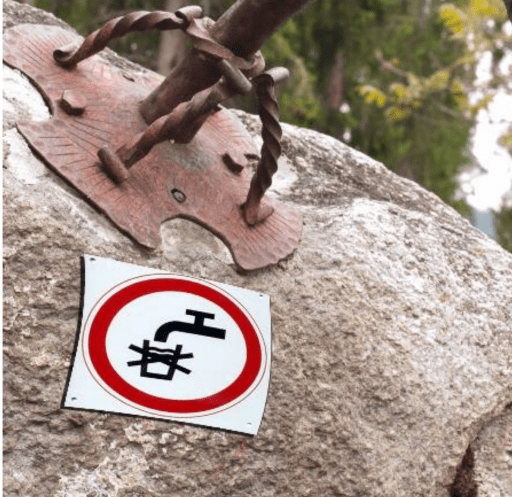
Another option is to drink the water on fountains, since they are almost all safe. If not, you will see a sign as the one in the picture above.
Or you buy water in the supermarket, but please, do not buy drinks in kiosks or small shops, which will rip you off!
Eating during the day
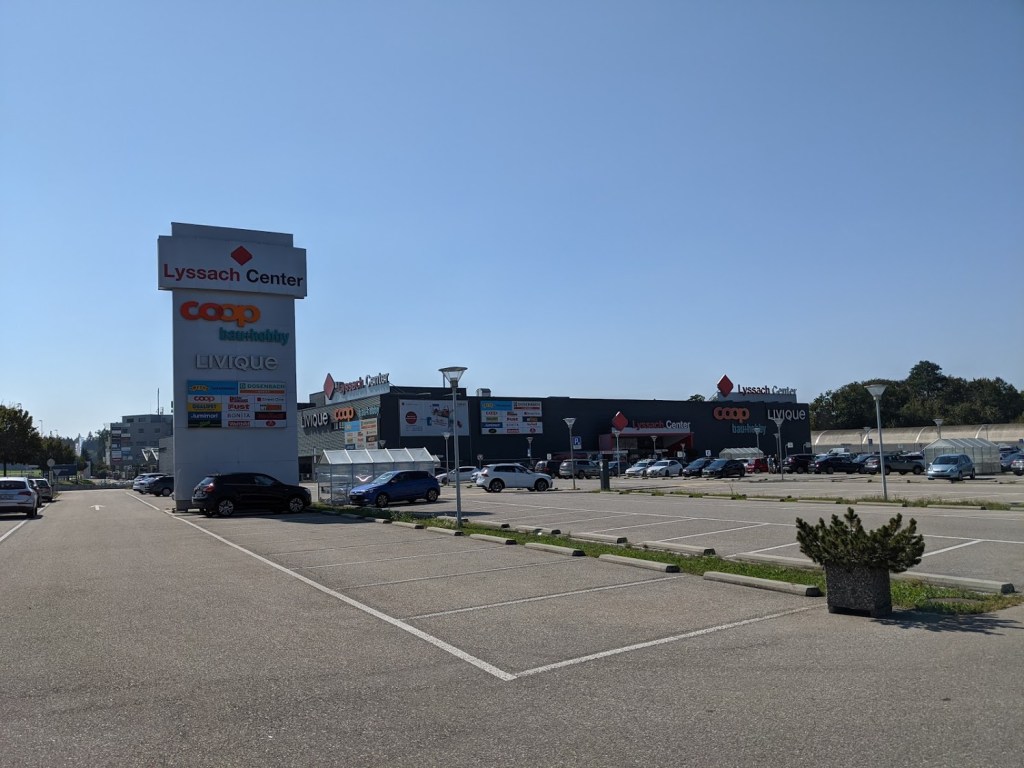
For food, go to the supermarkets Coop or Migros and buy something good and not so expensive. Buy a sandwich or make yourself a meal with bread, butter, meat and more. You can also make a campfire with your family at several places (use Google translate) and enjoy a calm evening. You don’t need to go to restaurants, only maybe 1x to eat a fondue or another Swiss specialty. These are excellent ways to save money in Switzerland.
Restaurants
If you really want to go to one, then check out tripadvisor for the best one around you and reserve a place a week or so in advance. Just that you know, an evening menu usually costs from 50 to 80.-, which would be enough to feed a whole family for two days.
However, don’t eat in cheaper supermarket restaurants. The food is really just ‘normal’ and not worth the price. Go rather to a Take-away or buy a Döner.
Locations to visit
Museum

Some museums have free times. The Kunsthaus Zurich collection is free on Wednesdays, the state museums in Basel on the first Sunday of the month and in the last hour before closing, and the museums in Bern on Saturdays in August. The free museum days calendar shows what is free in Zurich, Bern, Basel, Geneva, Lausanne and Lucerne on the days you are there. Here’s a list of the top museums in Switzerland. For example, the very interesting Laténium in Neuchatel is free “Every first Sunday of the month.”
Public Swimming pools

In Bern most public swimming pools are free or very cheap. Or go near the river called Aare in Bern.
But there are way more options. We also have lakes!
An example: You start your day by travelling and visiting the city of Neuchatel (there are awesome museums). You eat something from the Supermarket and continue your afternoon in the city or at the beach. In the evening, you could eat the Cervelat or other sausages on a campfire. That is an interesting day and also very wallet-friendly.
15 Top-Rated Tourist Attractions in Switzerland
I found this article which shows you the most known locations to visit. If you want to spend a lot of money, you can. However, mind the tips I listed above and try to save money while still enjoying your trip!
Well, enjoy your vacation and until next time
Read next: Tourist tax calculator · Train delay compensation · Vignette and toll checker · Split trip costs · Entry rules checker · Free museum days in Europe · Flight delay compensation calculator · Top websites for budget travel · Minimalist packing list · All Travel frugally guides